The Hidden Cost of Being the One Everyone Counts On
When we tie our self-worth to productivity, capability starts carrying emotional weight it was never meant to hold. Achievement brings satisfaction, success earns recognition, and dependability builds trust. Over time, though, performance can become proof that we are valuable, safe, needed, or deserving of approval.
That pattern reaches beyond a full calendar. We may feel unsettled when the to-do list is short, guilty when we rest, or exposed when someone else performs a task. A missed goal can feel like a judgment on our character, while praise provides only temporary relief. Ambition itself is not the problem. The pressure begins when our identity depends on constant evidence of achievement.
We can separate our inherent worth from our output while keeping our ambition, leadership, and commitment to meaningful work.
Key Takeaways
Being “the capable one” can become a role we feel responsible for maintaining, while our worth is part of who we are.
Performance-based identity turns ordinary limits into threats to belonging and respect.
A values-aligned scorecard measures how we lead, relate, delegate, and respond under pressure.
The Invisible Expectations That Come With the Role
Being “the capable one” creates invisible expectations that make overwork feel responsible and boundaries feel risky. We may become the person who absorbs pressure, anticipates every need, and protects others from disappointment.
The role can look like strength from the outside while creating fear of failure, guilt, anxiety, and chronic stress inside. Changing it requires noticing when limits trigger shame and responsibility slides into overfunctioning.
Why Delegation Can Feel Like Letting People Down
Delegation can feel like letting people down when dependability becomes central to our identity. Handing over responsibility may raise fears that others will question our value, competence, or commitment.
That fear affects the team. We keep decisions close, answer every question, and remain available long after our role requires it. Colleagues receive less ownership, while we feel isolated under the guise of indispensability.
Setting boundaries becomes a leadership practice here. Boundaries give people clarity about responsibility and create room for shared capability. We can communicate the outcome, authority, and support available, then let someone else carry the work.
How Perfectionism and Control Protect a Performance-Based Identity
Perfectionism and control protect a performance-based identity by reducing the chances of criticism, uncertainty, or disapproval. If we attend to every detail, we can postpone the risk of being seen as limited.
The protection comes with a cost. Overworking narrows our relationships, drains attention, and teaches teams that trust depends on flawless execution. Self-criticism may sound like accountability, yet its constant pressure rarely produces the connection or creativity people need.
We can ask, “What standard serves the mission, and what standard protects my image?” That question separates useful care from compulsive control.
What Happens When Uncertainty, Mistakes, or Limits Feel Unsafe
When uncertainty, mistakes, or limits feel unsafe, ordinary leadership moments register as identity threats. A changing plan feels like personal failure, a mistake feels like exposure, and a limit feels like evidence that we have lost our place.
This response often intensifies stress across the system. We conceal concerns, delay difficult conversations, or promise more than our capacity allows. Transparency creates another option: naming what we know, what remains unclear, and what support the next decision requires.
Grace also has operational value. It helps us review an error without turning it into a verdict, repair trust without defensiveness, and choose a response that fits the situation.
When Outcomes Become Proof of Your Worth
Outcomes become proof of our worth when achievements determine whether we feel secure, respected, or enough. The pattern turns work into an emotional measure, so productivity affects self-esteem long after the task is complete.
A full calendar can conceal overwhelm, burnout, emotional exhaustion, and chronic stress.
Why a To-Do List Can Become an Emotional Scorecard
A to-do list becomes an emotional scorecard when completed tasks produce relief and unfinished tasks produce shame. The list stops organizing work and starts answering a painful question: “Did I do enough to deserve rest or approval today?”
This makes completion feel urgent even when the task has limited value. We may choose visible busyness over important work because visible progress offers faster validation.
A healthier review separates facts from identity. We can record what moved forward, what required care, what remains, and what our leadership made possible. None of those entries needs to carry a judgment about our worth.
The Leadership and Human Cost of Never Feeling Enough
Never feeling enough affects more than our emotional well-being. Leaders who depend on output for security may become unavailable, controlling, or reluctant to share difficult information. Teams sense the pressure and may respond with silence, overwork, or cautious compliance.
Relationships carry the strain home. Connection becomes conditional on our remaining useful, while loneliness grows beneath a reputation for competence. When chronic stress continues, burnout and mental health concerns deserve appropriate care from qualified professionals, alongside changes to the leadership patterns sustaining the pressure.
A healthier system does not require one person to function as its safety net. Shared accountability, clear roles, and honest capacity conversations protect both results and people.
Replacing Performance With a Values-Aligned Scorecard
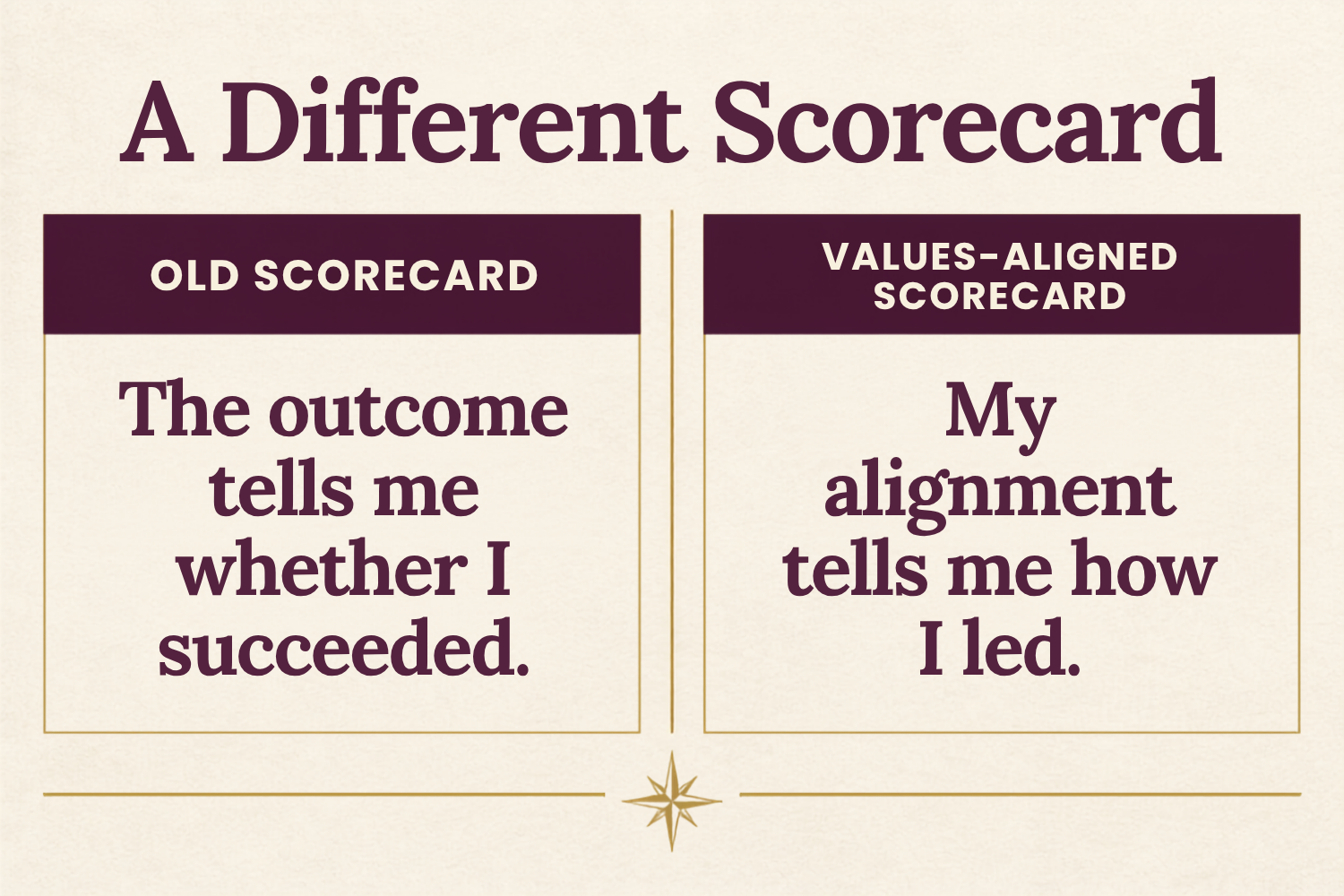
Comparison of an old scorecard based on outcomes with a values-aligned scorecard based on how we led.
A values-aligned scorecard measures the quality of our choices, relationships, and leadership under pressure. It defines success by how we led, not by the outcome alone.
We can use questions such as:
Did our actions reflect the values we claim to lead by?
Did we communicate with transparency when the outcome was uncertain?
Did we create space for another person to contribute and grow?
Did we respond to a mistake with accountability and grace?
Did our pace support mental clarity, presence, and sustainable personal growth?
This scorecard does not lower standards. It places standards in service of purpose, so ambition can guide meaningful work without becoming a demand to prove our worth.
Small wins become visible through this lens. A respectful boundary, an honest conversation, a thoughtful delegation decision, or a pause before reacting can represent progress in leadership even when the outcome remains unresolved.
Armed with Ambition’s STRONG Leadership Framework offers language for practicing this shift. Surrender helps us release overcontrol. Transparency supports honest communication. Respectful Relationships grounds connection in mutuality. Optimism keeps possibility present without ignoring reality. Navigate Your Next Level helps us move with intention through change. Grace extends compassion when our performance cannot carry the day.
We can begin by tracking one values-based behavior alongside our usual results measure. At the end of the week, note where we led authentically, strengthened trust, shared responsibility, or chose presence over reflexive performance. With repetition, self-acceptance becomes less dependent on the next achievement.
If being “the capable one” has started shaping how you lead, the STRONG Leadership Quiz can help you identify which part of the framework needs your attention now.
Who are you when your performance can’t reassure you?
